
TAILORSCAN RESEARCH JOURNAL / INDUSTRIAL AUTOMATION / OCTOBER 23, 2026
Industrial machinery can outlive the companies and product families that control it. A discontinued drive or timing module is not merely a spare-parts problem: it is a compatibility, safety, documentation and lifecycle-engineering problem.
Affiliate disclosure: As an Amazon Associate I earn from qualifying purchases. Six optional Amazon comparison links throughout this article are paid affiliate referrals. The linked Udemy course may also earn a commission. Manufacturer standards and safety references remain independent citations. Prices, eligibility and product suitability are not guaranteed. No industrial retrofit equivalence or actual commissions have been verified. Editorial standards.
The paradox of a working machine with an unsupported brain
A motor, conveyor, pump or process machine may remain mechanically useful long after a controller family is withdrawn. Its control cabinet can contain digital and analog circuitry, proprietary interfaces, timers, power supplies and communication cards produced by firms that no longer sell the same models. Operators understandably ask a simple question: if the machine still does useful work, why should an unavailable board threaten its service life?
The answer lies in dependencies. A variable-frequency drive coordinates power conversion with motor parameters, acceleration and deceleration, overload protection and fault handling. A programmable controller coordinates logic and interlocks. A time clock or relay may look minor until it participates in a sequence that affects access, production, environmental control or operator safety. Two devices with identical voltage labels can respond differently to an input, delay an output by different amounts or handle a fault in incompatible ways.
Aging and obsolescence reinforce each other. A unit left in operation faces thermal and electrical wear; a spare left on the shelf may age, lose its backup battery, become incompatible with new software or demand vendor-specific recommissioning. Even when hardware can be repaired, technical manuals, firmware tools, programming cables, security keys and skilled knowledge may be unavailable. Manufacturers may discontinue a product without ceasing all repair support, so support status must be verified at the exact catalog-number and revision level.
Rockwell Automation publicly distinguishes four lifecycle stages: Active, Active Mature, End of Life and Discontinued. The final stage means new units are no longer manufactured or procured, not necessarily that every repair or exchange service has disappeared. Manufacturer lifecycle notices, distributor inventory and actual installed revisions are different evidence sources. Treating a product as ‘obsolete’ without separating those facts can trigger unnecessary capital spending or dangerously optimistic spare-parts assumptions.
Obsolescence has a standard because it is predictable
IEC 62402:2019 describes obsolescence management as an organized process throughout the life of an item. It is not restricted to electronic chips. A complete asset can become difficult to support when mechanical components, software, calibration equipment, data interfaces or contractual support arrangements vanish. A lifecycle program therefore collects evidence while the equipment still operates, rather than attempting to reconstruct the system during an outage.
Useful baseline information includes the manufacturer’s identity, exact model and revision, firmware versions, approved substitutes, wiring documentation, parameter records, programming dependencies, backup method, installation date where known, environmental stress, support notices and function in the process. The distinction between ‘unknown’ and ‘none’ is essential: failure to find documentation does not prove that no replacement or repair pathway exists.
Any such inventory must respect employer confidentiality, access policies and safety/security controls. Publishing photographs of control cabinets, network addresses, ladder logic or installed spare quantities can expose operational information. Technical records may also be the employer’s intellectual property. A public engineering lesson can discuss the discipline without revealing customer identities, facility topology, equipment counts or proprietary controls.
PUBLIC INDUSTRY MODELS / NOT A PRODUCT ENDORSEMENT

Lifecycle is a controlled status
Rockwell’s public product-lifecycle definitions distinguish a last-time-buy warning from complete discontinuation and possible continuing repair service.
Independent technical reference. Optional labeling for authorized off-machine service records; not a lifecycle decision tool. Never obscure OEM nameplates or safety labels.
Compare Brother P-touch PT-D210 label maker on Amazon ↗
Paid Amazon search link; verify listing, seller and current terms. No TailorScan product test or industrial certification.

A formal management discipline
IEC 62402 addresses proactive planning, risk, resolution choices and performance improvement over an asset lifecycle, not just buying emergency spares.
Independent technical reference. Optional scanning of drawings and records that the owner is authorized to retain. Honor intellectual-property, privacy and document-access restrictions.
Compare Epson WorkForce ES-50 document scanner on Amazon ↗
Paid Amazon search link; verify listing, seller and current terms. No TailorScan product test or industrial certification.
Affiliate disclosure: As an Amazon Associate I earn from qualifying purchases. Links in these cards are compensated; availability, suitability and real-world outcomes are unverified.
Why ‘electrically equivalent’ is only the beginning
Suppose an old VFD and a new VFD both accept the nominal line supply and carry the same motor current rating. That does not establish drop-in compatibility. The replacement may differ in overload duty, input harmonics, output switching behavior, regenerative energy handling, motor thermal protection, control terminal logic, communication protocol, safe-torque-off architecture, braking arrangement, EMC filtering, fieldbus timing and fault recovery. A parameter copied by name can represent a different behavior. Mechanical mounting and heat dissipation can require additional changes.
The functional contract is larger than the hardware. Consider a controller that starts a motor only after pressure, guarding, permissive and sequencing requirements are satisfied. A replacement that moves the motor in a bench test but ignores an interlock is not equivalent. Hardware-in-the-loop simulation, formal review of sequence-of-operations, negative testing of fault states and competent commissioning are different from a hurried motor spin demonstration.
Digital time clocks and timing relays are deceptively complex. One may close a contact after a power interruption; another may reset. One may maintain its state during daylight-saving transitions; another may not. Output relay wetting current, isolation class, contact ratings, startup default, clock drift and manual override behavior can all matter. If the timer participates in personnel safety, security or regulatory recording, a cheap generic substitution introduces risks disproportionate to the part price.
Human-machine interfaces and controllers have less visible interfaces: serial framing, proprietary registers, scaling conventions, alarms, event timestamps and operating modes. A network gateway can translate protocol bytes yet still misinterpret meaning. Bridging an old device into a modern network is an integration project requiring boundary controls and validation, not automatic proof of improved cybersecurity or safety.
Visual decision map: keeping a legacy system supportable

Three choices: sustain, remanufacture, or migrate
Continued authorized maintenance can make sense when components, documentation and qualified repair support remain available. A documented repair process must preserve the unit’s essential safety functions and be consistent with its regulatory and contractual environment. Replacement capacitors, contactors or cooling fans may be available while a processor ASIC, firmware image or isolated gate driver is not. The repair boundary must be determined from the actual device, not from a general statement that electronic parts can be replaced.
Remanufacturing or a supplier-provided exchange program may temporarily preserve an installed platform. However, the provenance of replacement parts, test coverage, warranty, supported revisions, cybersecurity posture and future supply all need scrutiny. Stockpiling untested vintage boards can shift the organization from shortage risk to storage-aging and latent-defect risk without solving support continuity.
Migration typically means more than replacing one controller. It may involve revalidating electrical design, software, communications, human controls and maintenance procedures. The benefit is reduced dependence on an unsupported ecosystem, but the one-time engineering burden can be substantial. A phased migration can preserve production availability while evidence and capital are assembled, provided the interim risks are explicit.
From aging asset to defensible decision
Expand each public-domain stage. The model is conceptual; it cannot certify an obsolete controller or determine an acceptable safety risk.
Identify
Verify
Validate
Decide
Free obsolescence evidence checklist
Select which documentary evidence categories are already available. This tool counts documentation coverage only. It is not a risk score or permission to operate or alter a safety-related system.
Keep actual equipment identifiers, network topology, employer data and facility details inside approved internal systems. Nothing is uploaded from this local checklist.
COMPATIBILITY / SAFETY BASIS
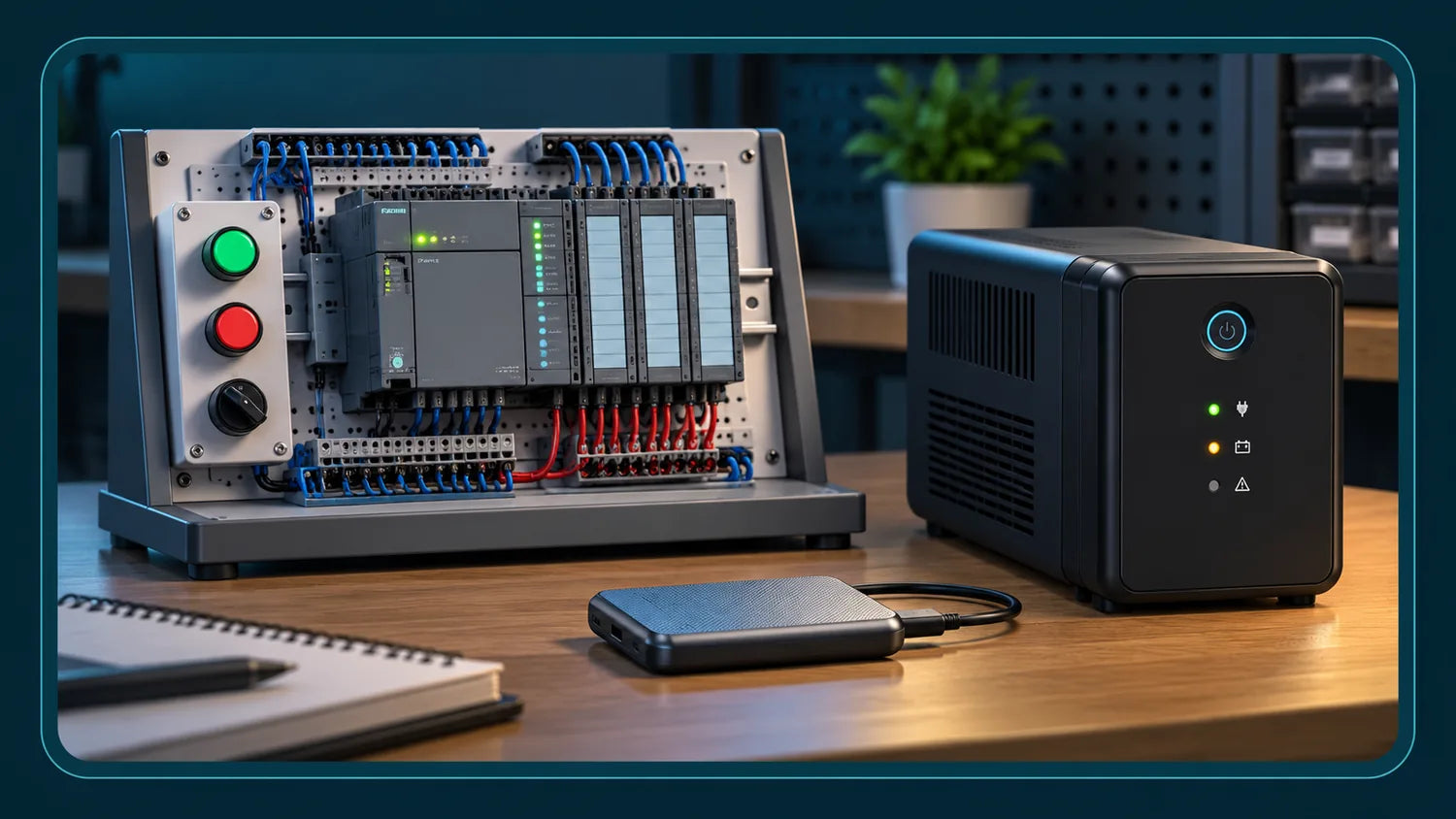
Drive-system safety
IEC 61800-5-1 defines electrical, thermal and energy-safety requirements applicable to adjustable-speed electrical power-drive systems.
Independent technical reference. For isolated low-voltage input/output exercises only, not drive-system safety functions. Not a safety-rated or qualified industrial controller.
Compare Official Arduino Starter Kit on Amazon ↗
Paid affiliate link; no industrial suitability or tested-performance claim. Verify the actual listing before purchase.
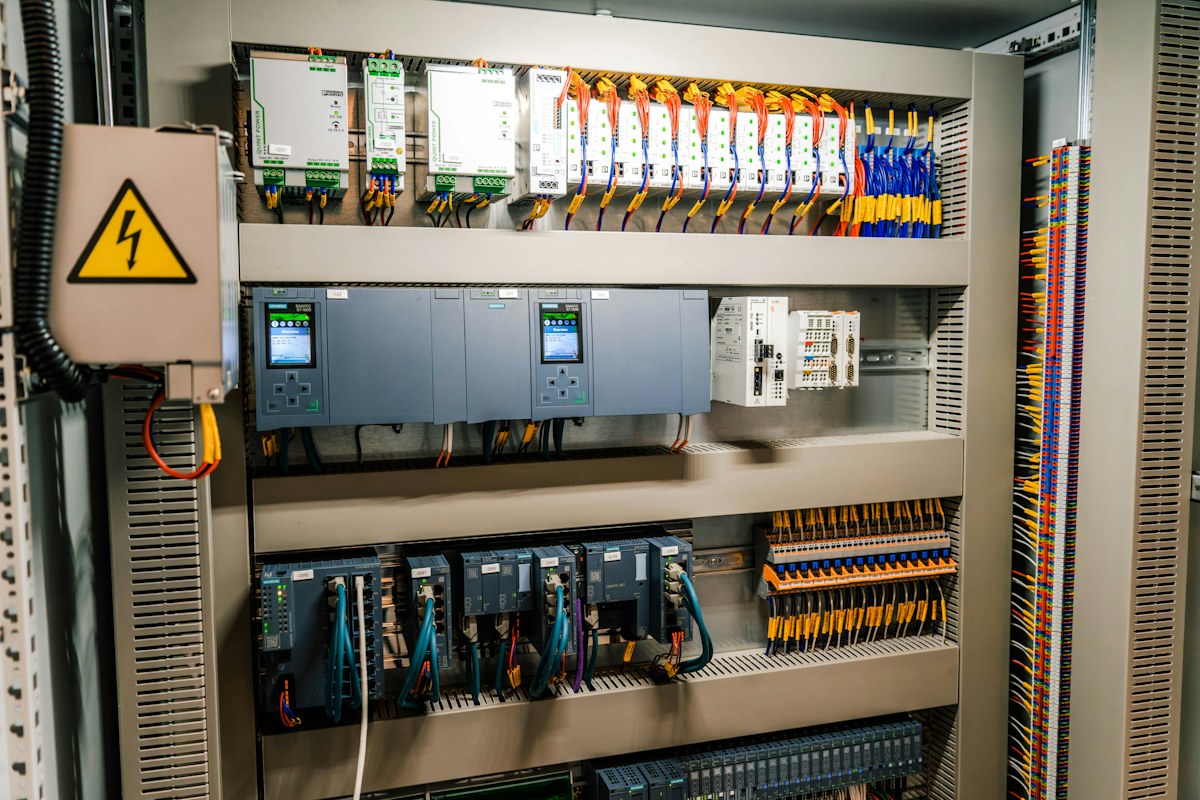
Legacy support is not a guarantee
Rockwell’s public program explains installed-base reviews, migration planning and limited repair/sustainment options, while acknowledging lifecycle constraints.
Independent technical reference. For tabletop learning about scans, inputs and ladder-logic fundamentals, separate from installed machinery. Verify trainer scope; not a certified replacement for any obsolete PLC or safety system.
Compare Educational PLC trainer on Amazon ↗
Paid affiliate link; no industrial suitability or tested-performance claim. Verify the actual listing before purchase.
Affiliate disclosure: As an Amazon Associate I earn from qualifying purchases. Links in these cards are compensated; availability, suitability and real-world outcomes are unverified.
Safety functions are not an interchangeable accessory
Safety functions can involve dedicated rated devices and validated control architecture. Emergency stop, guarding, lockout, overtemperature protection, overspeed detection and safe torque off serve distinct purposes; they cannot be replaced by an ordinary software screen or a general-purpose relay because the normal operating sequence appears similar. A controls retrofit can change protective stopping behavior, machine risk boundaries and the assumptions behind an existing installation or listing.
OSHA’s 29 CFR 1910.147 and 1910.333 establish important hazardous-energy and electrical-work rules within their applicable scopes. Stored energy in capacitors is especially relevant to VFDs and power converters. Removing external power does not guarantee an empty DC link. Repairs, parameter restoration and validation must follow employer-authorized procedures, competent personnel qualifications and equipment-specific requirements. This article intentionally omits wiring recipes and any steps that might be mistaken for authorization to modify energized, high-energy equipment.
Another boundary is cybersecurity. Equipment intended for a closed industrial network may have weak authentication, unsupported firmware and insecure legacy protocols. Attaching it to remote monitoring or cloud systems may create a new attack path. Passive observation, segmentation, read-only access, change control, authenticated remote administration and incident recovery require design specific to the organization’s threat model. ‘Modern interface’ is not equivalent to secure migration.
Optional training: Udemy affiliate partner
PLC Fundamentals training: Educational content for understanding programmable controllers and industrial control principles. The exact destination of this partner-generated link remains subject to Udemy access controls; inspect course syllabus before buying. This training does not qualify readers to commission machinery, alter safety functions or work on energized equipment.
Affiliate disclosure: TailorScan may earn a commission from eligible enrollments through this Impact tracking link, at no extra cost to you.
Training and administrative decision tools
Free first: verify OEM lifecycle notices and safety guidance. See TailorScan’s legacy-equipment monitoring research.
For facility administrators: TailorScan’s optional $19 Property Maintenance Approval & Vendor Control Desk records vendor quotations, manual approvals and spend caps. It does not diagnose PLCs, qualify replacement controllers, certify a retrofit, authorize work, or operate as an industrial CMMS.
How engineering teams compare support strategies
A responsible analysis accounts for failure consequence and recoverability, not just the cost of a spare module. Key questions include whether a failure stops one noncritical utility or a bottleneck production line, how long detection and diagnosis take, whether a tested spare exists, whether programming and calibration can be restored, and whether the system can be safely bypassed at all. Some equipment may have mandated upgrade dates, environmental obligations or contractual requirements that override a purely economic decision.
Installed-base documentation can be incomplete, so useful classifications include verified, reported and unknown. An unsupported-board market listing does not prove authenticity, safety or usable firmware. A vendor’s compatibility chart may be accurate for one hardware revision but not another. A photograph of a matching label is not an engineering test record.
For major decisions, compare at least three baselines: retain under present controls, plan qualified refurbishment where genuinely supportable, and migrate using an engineering-approved architecture. Costs include engineering, downtime, test fixtures, commissioning, documentation, operator training, vendor support, spare lead times and future maintenance hours. Any claimed payback should disclose assumptions rather than converting hypothetical avoided downtime into earned savings.
The full decision process belongs with the equipment owner, original equipment manufacturer where possible, qualified engineering teams and relevant safety professionals. A guide can help organize questions. It cannot replace review of actual circuits, software and installation conditions.
DECISION GOVERNANCE / RISK CONTROLS

Hazardous energy stays hazardous
OSHA’s lockout/tagout framework covers appropriate servicing risks, including stored and residual energy when its scope applies.
Independent OSHA reference. Optional storage for encrypted copies of records the owner is authorized to preserve; not machinery control or LOTO equipment. Require appropriate access controls and obtain document-owner authorization.
Compare Samsung T7 Shield portable SSD on Amazon ↗
Paid Amazon link. Verify current specifications, price and seller; no TailorScan equipment-certification claim.

Electrical-work safeguards
OSHA 1910.333 specifically addresses deenergized equipment and capacitor stored energy; personnel must use approved procedures.
Independent OSHA reference. Optional backup power for an appropriately rated low-power office documentation workstation. Not for VFDs, safety circuits, high-inrush machinery or industrial electrical equipment.
Compare CyberPower CP900AVR battery backup on Amazon ↗
Paid Amazon link. Verify current specifications, price and seller; no TailorScan equipment-certification claim.
Amazon disclosure: As an Amazon Associate I earn from qualifying purchases. These are optional compensated references and are not independent product tests.
Evidence visual: the route from scattered records to a defensible plan
The hidden data problem in old equipment
Many mature operations possess decades of maintenance notes, parts purchases and technician knowledge, but not in a clean format that an engineer can search and trust. Historical notes can contain useful clues such as repeated fan failures, power-supply drift or firmware incompatibilities. They can also contain outdated assumptions and undocumented workarounds. Converting them into an evidence-backed asset record requires controlled terminology, timestamps, document provenance and a distinction between observation and approved specification.
That process can improve prioritization without inventing a universal obsolescence score. A decision record can preserve the exact failure observed, the source and date of vendor support statements, what was tested, which functions were excluded, who authorized a change and the results of commissioning. The goal is institutional memory that survives equipment and staff turnover, not a collection of anecdotes treated as interchangeable procedures.
Interoperability standards can help new equipment communicate, but integration is not the same as equivalence. A translated motor-speed command must still be checked for units, limits, scaling and what happens when communication fails. A general industrial protocol can make data more accessible while safety-rated functions remain on their own validated control path. The software designer must account for lost packets, inconsistent state, restart conditions, timestamp drift and improper commands.
Where responsibility begins and ends
A complete control-system modernization includes ownership of firmware, schematics, backups, licensing, system access and operating instructions. Customers should also know what happens if the retrofit vendor disappears. Open interfaces may increase portability, but the existence of a published protocol does not mean the installed system is portable without source code, test evidence and service tooling. The design should avoid replacing one vendor lock-in problem with an undocumented custom black box.
Independent providers may offer assessment, training, certified retrofit engineering, documented spares planning or migration services. Such offerings are not automatically novel; industrial original-equipment manufacturers and service companies already compete here. A successful service has to demonstrate specific customer value, qualified delivery, insurance and compliance coverage, and reliable post-installation support. The decisive product is not a promise to make old machinery eternal. It is a defensible method of preserving safe function while reducing unsupported dependencies.
Conclusion: design the handoff before the crisis
An obsolete controller can remain in service for years. Another may become an urgent problem the moment a unique power module or memory board fails. Neither outcome follows reliably from its age alone. The right technical response is to know what the component actually does, document the safety and functional contract, check the manufacturer’s support evidence, and choose a strategy that can be independently validated.
Industrial longevity requires more than rugged hardware. It needs accessible documentation, controlled configuration, verifiable backups, relevant spares, trained maintainers, cybersecurity boundaries and a migration route that can be tested before an emergency. Those practices can extend usefulness without making unsupported lifetime claims or accepting unsafe substitutions. A well-managed lifecycle turns a surprise breakdown into a decision that was prepared in advance.
Translate research into a documented decision
Use this article’s free evidence checklist and original equipment-maker information before committing to a project. TailorScan’s existing $19 one-time desktop-first approval desk is an administrative tool for small facilities and property operators, not a technical safety solution. A research collaboration inquiry is exploratory and must be separately evaluated and authorized.
Review the $19 approval desk ↗ Explore nonconfidential collaboration ↗
Owned software promotion is disclosed. There is no manufacturer endorsement, qualified industrial service, guaranteed revenue or confirmed repair capability.
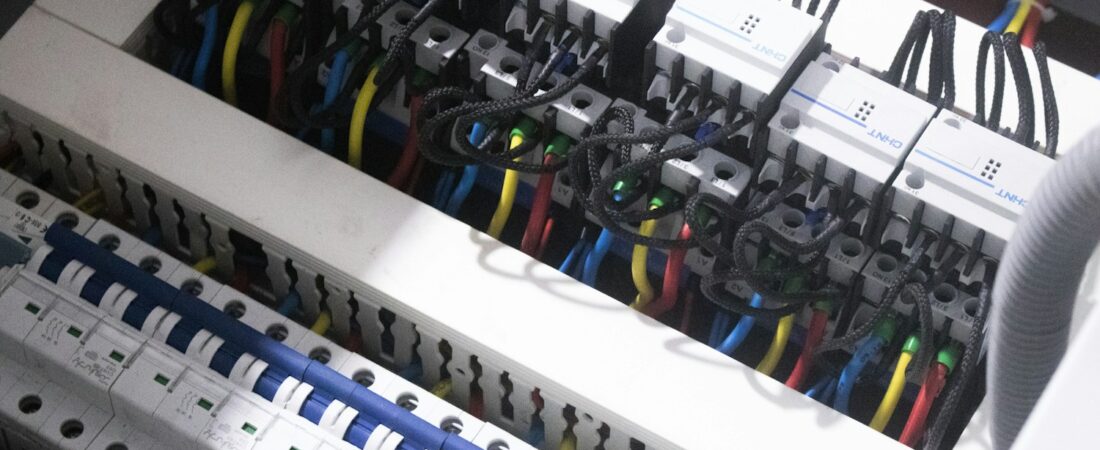
Featured photograph: mostafa mahmoudi / Unsplash, reused under the Unsplash License. Illustrative electrical control cabinet; not an identified work facility.
Source register and disclosure boundary
Primary public sources reviewed October 23, 2026. No employer records, operational facility details, equipment photographs or proprietary TailorScan development concepts are included. Featured image not yet commissioned or licensed; private draft only.
- IEC 62402:2019 obsolescence-management standard overview
- Rockwell Automation product lifecycle stages
- Rockwell Automation legacy support and installed-base evaluation
- IEC 61800-5-1:2022 safety requirements for adjustable-speed drives
- OSHA hazardous-energy control 1910.147
- OSHA electrical work practices 1910.333
- ABB drive capacitor guidance (illustrative model, not retrofit approval)
- USPTO: public disclosure and patent filing considerations